This guide does not list "the ten best car parks": it gives you the logic residents follow to decide where to leave the car depending on what they have come to do, and above all where not even to try.
Why Cannes is hard to drive in (and why that is fine)
The heart of Cannes is compact. Between the Old Port, the Croisette, Rue d'Antibes and Le Suquet, everything is a quarter of an hour away on foot. That is excellent news for the visitor but the opposite for the driver, because this density means few spaces, slow traffic and one-way streets that often take you away from your destination.
The second reality to take on board: on-street parking near the seafront is paid, time-limited and monitored. The more you try to park right in front of the sea or the Palais, the higher the hourly rate climbs and the more fiercely the space is contested. Conversely, as soon as you move a few streets inland, the pressure drops.
Hence the principle that shapes everything else: in Cannes, you do not look for the ideal space, you choose an anchor point and you walk. This mental switch saves you a considerable amount of time.
The local habit: park once, then walk
Cannes residents who know the town apply a simple habit, park-and-walk: you park the car just once, somewhere reliable, and you do not pick it up again all day. You then take in the centre, the beach and the port on foot, because everything is within reach.
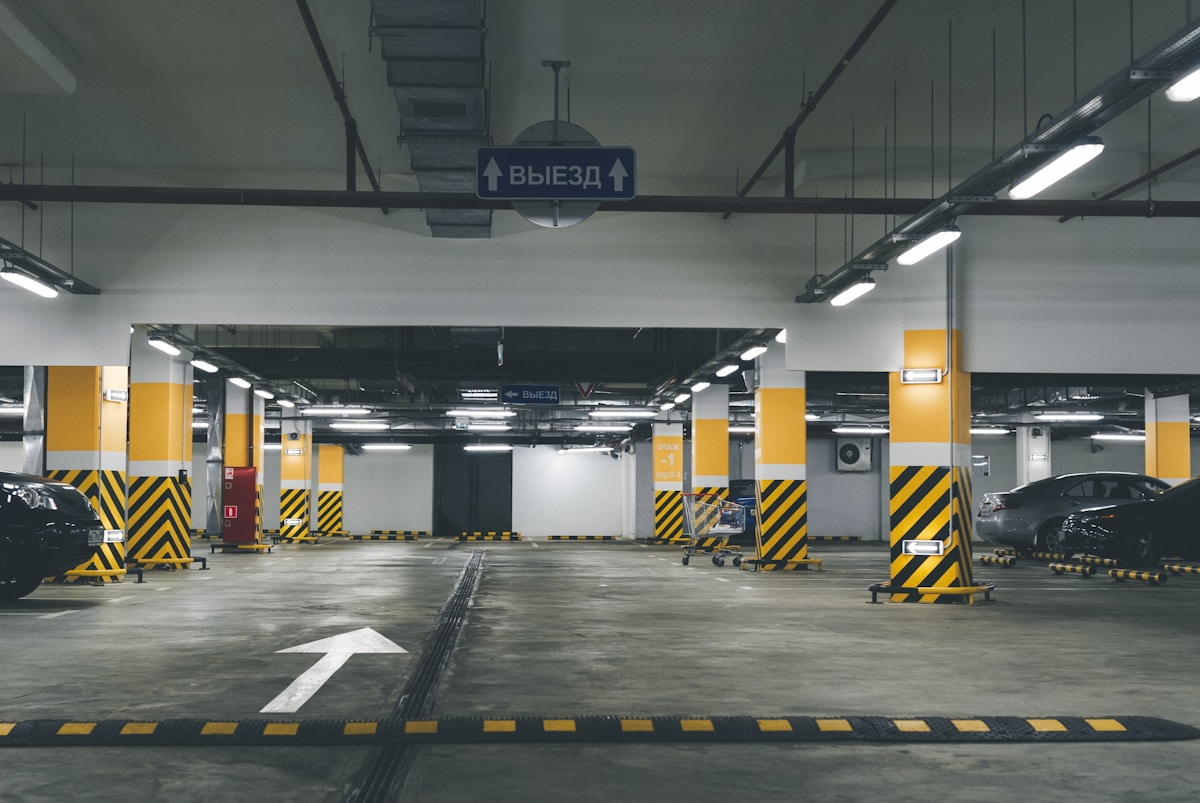
In practice, that means favouring an underground car park or a parking spot slightly out of the way rather than hunting for a space as close as possible. You pay a clear flat rate, you do not stress about the time limit, and you collect the car in the evening without having moved it five times.
Three habits are worth copying:
- Arrive early. Before 10 am in season, the central car parks still have room to breathe. After midday on a fine day, you join the queue.
- Aim for a covered car park rather than the street. An underground car park guarantees you a space and keeps the car in the shade: a real comfort in summer on the Côte d'Azur.
- Accept a ten-minute walk. A space found a few streets back from the seafront costs you less and spares you the worst of the traffic.
To fit this logic into a real visit plan, lean on our Cannes in 3 days itinerary: it groups the stops by area, which automatically limits car journeys.
Where to leave the car depending on your visit
The right choice depends mostly on what you have come to do. A beach day does not call for the same habit as a dinner in town or a trip to the islands. Here is how to route your decision.
| Your visit | Where to aim | Why |
|---|---|---|
| A day in town (centre, Rue d'Antibes, Croisette) | Underground car park in the centre, then everything on foot | A single manoeuvre, car in the shade, zero parking-meter stress |
| Beach day | Park back from the seafront and walk down | Parking right by the sea is the most expensive and the most contested |
| Dinner or evening out | Covered car park near the Old Port | Spaces still available in the evening, a calm return at night |
| Departure for the Lérins Islands | Car park near the Old Port, where the shuttle boats leave from | You leave the car before boarding, with no trip back in between |
| Long stay with no daily need for the car | Accommodation with parking, car at rest | Cannes is lived on foot; the car is mainly for excursions |
If your day revolves around the sea, settle the place first and the parking second by consulting our beach addresses in Cannes: several lie within walking distance of the same area, which lets you park only once for the whole day.
And for an excursion, the reasoning is even clearer: before boarding for the Lérins Islands from the Old Port, you park the car on the port side, take the shuttle boat, and do not touch it again until you return. Trying to get closer at all costs is pointless, since the crossing happens without it.
The days and times to really avoid
Certain windows turn parking into an ordeal. Knowing them in advance is better than discovering them stuck in a queue.
The first trap is the Festival period and the major conventions. When the Palais is running at full capacity, the centre partly closes, lanes change direction, and parking near the Croisette becomes a luxury. On those dates, the only reasonable strategy is to park far away and enter the centre on foot or by public transport, not to hope for a space in front of the red carpet.
The second is market mornings around Forville and fine-weather summer weekends, when the whole region converges on the seafront. On Saturdays and Sundays at midday in July and August, the central car parks are full early.
A few pointers for planning ahead:
- Check the event dates before coming by car: the Festival, conventions and summer fireworks disrupt traffic.
- Shift your arrival: early in the morning or early in the afternoon, outside the 12 pm-2 pm peak.
- If in doubt, park further out and finish on foot; ten minutes of walking beats forty minutes of circling.
This constraint is also one more reason to think of the stay in areas rather than in journeys. To plan your trip to Cannes, grouping a day's visits in the same district reduces car use accordingly.
Electric cars, two-wheelers and drop-offs: the special cases
A few situations deserve their own habit.
The electric car. Charging points exist in town and in some car parks, but they are not unlimited: do not count on plugging in at the last minute on a busy day. The smart move is to charge while you are sightseeing, in a dedicated bay in a covered car park, rather than look for a free charging point on the street.
Two-wheelers. In Cannes, a scooter or motorbike is often the most rational answer: easier parking, weaving through traffic, dedicated spaces near the centre. Many residents have made this choice precisely to avoid the headache of the car.
The drop-off. To drop luggage at the hotel or pick someone up, favour a short, supervised stop rather than illegal parking on the seafront: the area is heavily patrolled and towing is quick. A clean five-minute stop is better than a fine.
A last point of method, true to the spirit of our guides: we point you to where we would park ourselves, with no partnership or arrangement with any car park operator. The aim is the same across the whole site: to have you experience Cannes like a resident, not like a passing vehicle. Once the car is put away, most of the town is discovered on foot, and that is precisely where it is most enjoyable, as shown by our restaurant addresses in Cannes, all reachable within a few minutes' walk of the centre.
Frequently asked questions
Can you visit Cannes without a car?
Yes, and it is even recommended. The centre, the Croisette, the Old Port and Le Suquet can be covered on foot in a quarter of an hour. The car only becomes useful for excursions to the hinterland or the neighbouring villages.
Is parking free anywhere in Cannes?
Near the seafront and the centre, assume not: parking there is paid and time-limited. Cheaper spaces exist if you move inland, but the general rule remains paid parking in the tourist zone.
Where should you park during the Cannes Film Festival?
Far from the centre, then reach the heart of town on foot or by public transport. During major events, the surroundings of the Palais and the Croisette are partly closed or full: aiming for a space as close as possible is a guaranteed waste of time.
Is a covered car park better than an on-street space?
During the day in summer, the covered car park almost always wins: a guaranteed space, the car in the shade, a clear flat rate and no parking-meter stress. On-street parking only makes sense for a short stop outside peak hours.